Dec 28, 2024 – When I removed Lilith from the egg nest I transferred it to the communal container. The webbing was incredibly dense and I didn’t want to risk squishing babies while attempting to get them all out. I started with 21, then I gave 5 to a friend, leaving me with 16. One in a deli cup died, so 15.
Suddenly I started seeing more babies in the communal cup. Like, several more. Remember, these guys started emerging on *checks notes* November 30th. Why was I suddenly getting more? Had they been hanging out in the nest that whole time? But they were half the size of the others. Had they hatched late? Just not emerged as much to eat? It was a mystery.
Meanwhile, the friend who’d taken the five said she couldn’t wait to get them home and take a look under her dissecting microscope. These guys are TINY and I really wanted to get a better look at them while they developed so I ordered a microscope as well. I saw many meant for coin collectors but you couldn’t move the scope up far enough for larger items, so I got one for soldering electronics. It came with a screen and could take video or photo. I was super psyched to get a better look at these guys… until I saw this:
I’ll admit I panicked. My friend mentioned that an older fruit fly culture I gave her was infested with them, so that was probably the source. She also said they normally eat the fruit fly food. I checked my other cultures and they all had mites.
A quick search did nothing to quell my fears – in the academic world at least, mites in fruit fly cultures was serious and meant quarantine. Thankfully, it seemed to be less of an issue for those of us who simply use them as feeders. Josh’s Frogs wasn’t concerned, and this was a really good post on mites in spider enclosures. Here’s a video on how to minimize them.
TL;DR – Basically that they’re not harmful except to fruit flies and only if they overwhelm the culture. Usually the longer the culture has been around, the more mites you have because they’re eating the food. Some species will also prey on the pupae but what I had were probably just grain mites. They don’t seem to cause an issue with spiders and are normal in bioactive enclosures. Keeping the cultures on diatomaceous earth can help mites from spreading between containers, and the post above talks about using a food source to lure mites off your spider.
My communal container had been going for awhile at this point, so I figured it was time to change it out. I moved nine spiderlings into the deli cups I had left and put everyone else (ended up being ten) into a fresh communal container. I’d gone from having 15 spiders back up to 28!
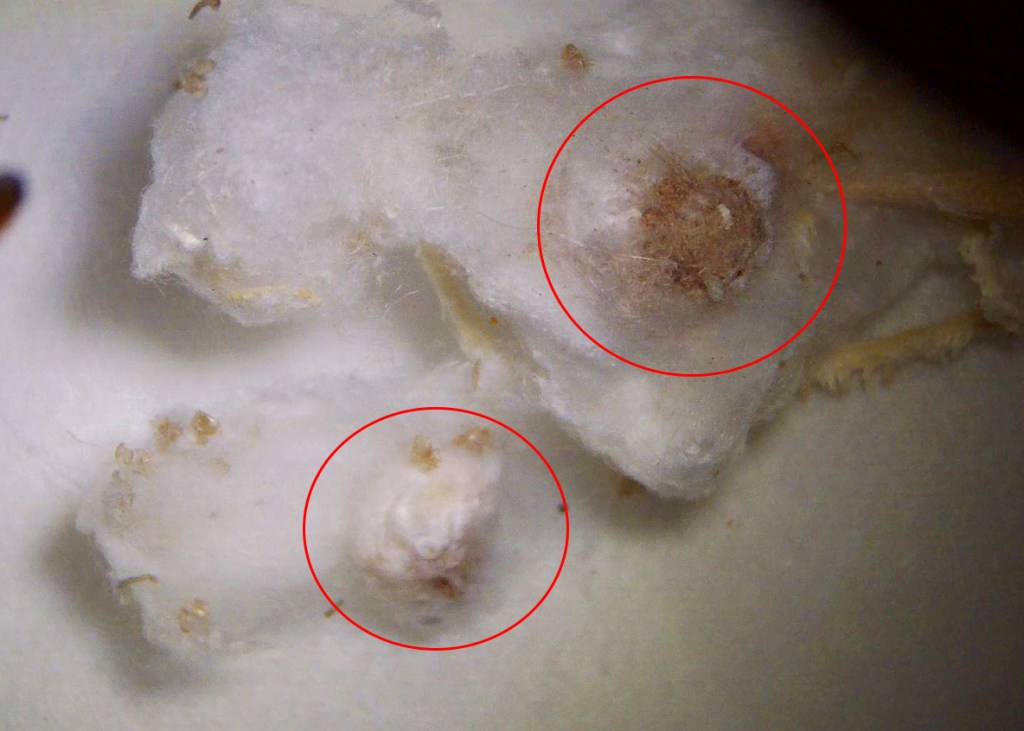
After removing everyone, I took out the egg sac and dissected it under the microscope. I found two denser masses inside, which I believe were two separate egg sacs. I’m not sure if this is normal or if Lilith was just enjoying her best life with food delivered right to her doorstep.
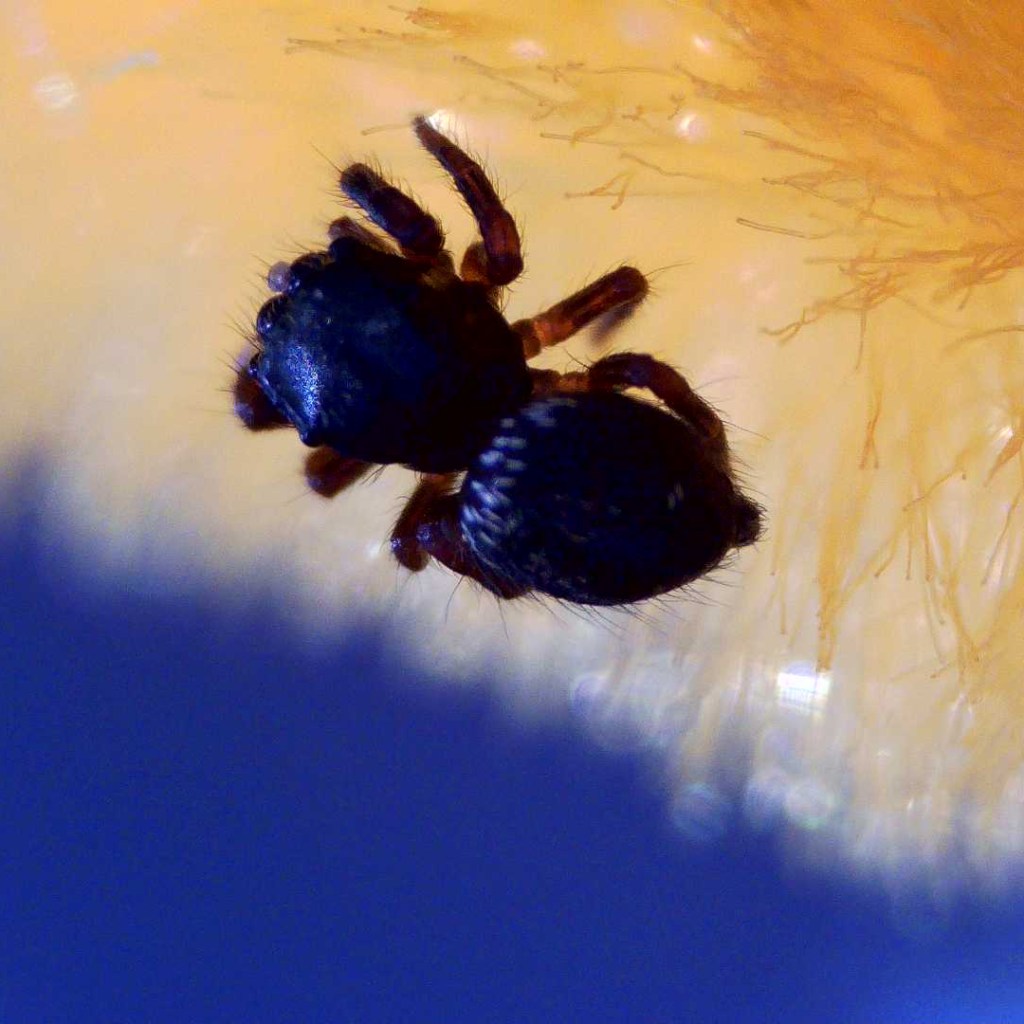
 Lilith's Legacy
Leave a comment